
Storage Built Around How You Enter
Mudroom & Entryway Cabinetry for homes that need coat hooks, cubbies, benches, and shelving fitted to the space
Entryways accumulate coats, shoes, bags, and sports equipment faster than most storage solutions can organize, especially in high-traffic households. UrbanWIRX designs and builds mudroom and entryway cabinetry—cubbies, shelving, coat hooks, and benches—fitted to the exact dimensions of your entry zone. The layout accounts for how many people use the space, what they need to store, and whether the area is enclosed or open to adjacent rooms. In Indianapolis-area homes where weather-resistant entry storage prevents wet coats and muddy shoes from moving deeper into the house, custom cabinetry maximizes small, high-traffic zones that cannot accommodate freestanding furniture.
The design process begins with a site measurement visit or detailed measurements you provide, capturing wall length, ceiling height, outlet locations, and any obstructions like light switches or HVAC vents. A custom cabinetry layout is drawn and rendered to show cubby heights, bench depth, and hook placement before construction. The build is completed off-site or in sections that are transported and installed during a second visit, depending on whether the design involves floor-to-ceiling built-ins or modular units that can be adjusted after installation.
Schedule a site measurement to review entry dimensions and storage needs.
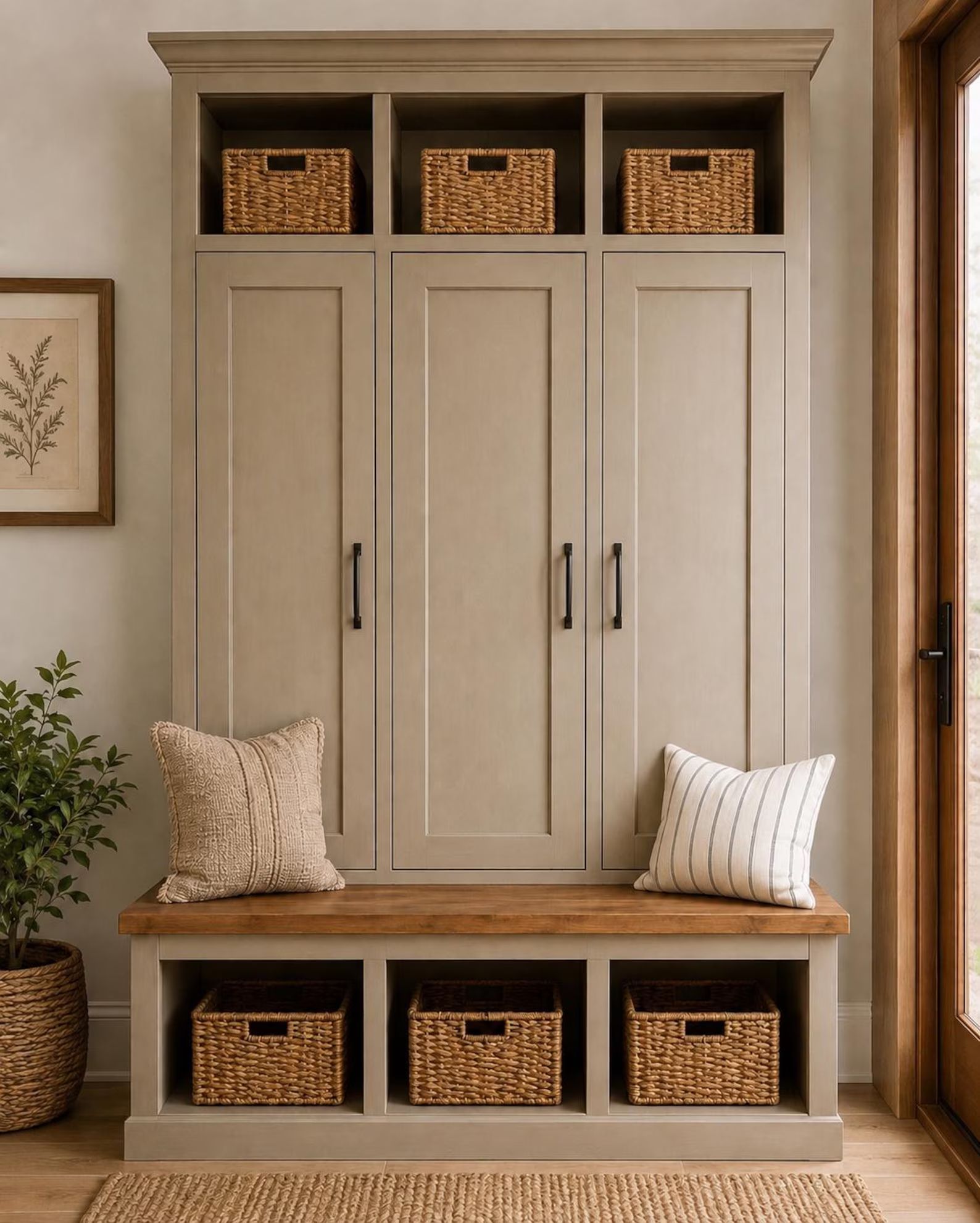
How Mudroom Cabinetry Addresses Traffic and Storage
Mudroom cabinetry is built with materials that resist moisture from wet coats and bags, and finishes are selected to withstand repeated contact with shoes and outdoor gear. Cubbies are sized to hold backpacks or sports equipment without items spilling into adjacent compartments, and benches are constructed with seat heights that make it easier to remove shoes without bending awkwardly. Hooks are mounted into studs or backing boards so they support heavy winter coats without pulling loose from drywall anchors over time.
After installation, the cabinetry runs the full length of the wall without gaps, benches sit at a height that accommodates adults and children, and cubbies provide enough vertical clearance for tall boots or bags. Coat hooks hold multiple items without overcrowding, and shelving above the hooks stores hats and accessories within reach. The finish holds up to daily contact without showing wear around handles or bench edges, and the cabinetry does not shift or wobble when people sit on benches or lean against the structure while putting on shoes.
Recent projects include a 30-foot built-in run in Carmel for a high-income client who required custom fit and finish details that matched existing interior millwork. Installation involved precise leveling and scribing to account for floor and wall irregularities, ensuring doors and drawers operated smoothly despite the cabinetry spanning a long, uneven surface..
Answers to Frequent Service Questions
Homeowners want to understand sizing, materials, and installation logistics before committing to a built-in system that anchors an entry space.
What depth do mudroom benches need for comfortable seating?
Benches are typically 15 to 18 inches deep to provide enough surface for sitting while leaving clearance for foot traffic, though exact depth depends on the room's width and how close the cabinetry sits to the opposite wall.
How is the cabinetry secured to prevent tipping?
Units are screwed into wall studs or mounted to backing boards that distribute weight across a larger area, and floor-to-ceiling designs are inherently more stable because the top is anchored to the ceiling or soffit above.
Can the design include closed storage for items I don't want visible?
Lower cabinets or enclosed cubbies with doors hide shoes, cleaning supplies, or pet gear, while open shelving and hooks keep frequently used items accessible without opening and closing doors during morning routines.
How does installation work in a finished entryway?
The cabinetry is built in sections and transported to the site, where it is assembled and secured to the walls, with scribing and trimming done on-site to ensure tight fits against baseboards and uneven surfaces common in older homes.
Why do Indianapolis-area clients choose custom mudroom cabinetry over freestanding furniture?
Custom cabinetry fits wall-to-wall and floor-to-ceiling without gaps, provides more storage in tight spaces, and matches the home's trim and finish details, which freestanding units cannot replicate in high-traffic entry zones.
UrbanWIRX has 17 years of custom cabinetry experience and handles projects requiring precise site measurement and installation. Arrange a consultation to discuss your entry layout and storage priorities.